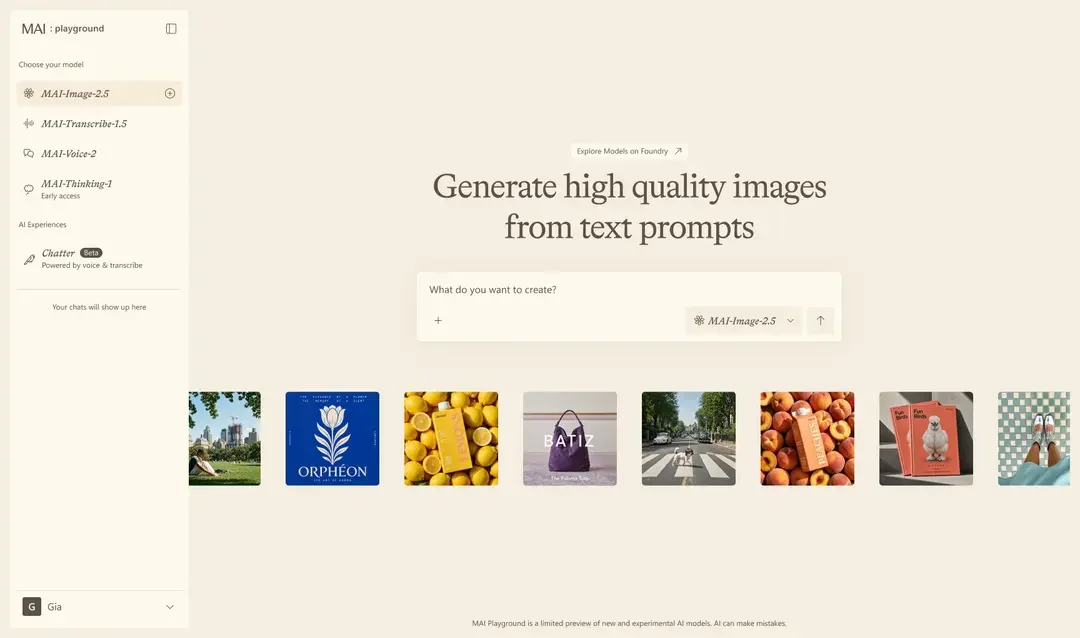
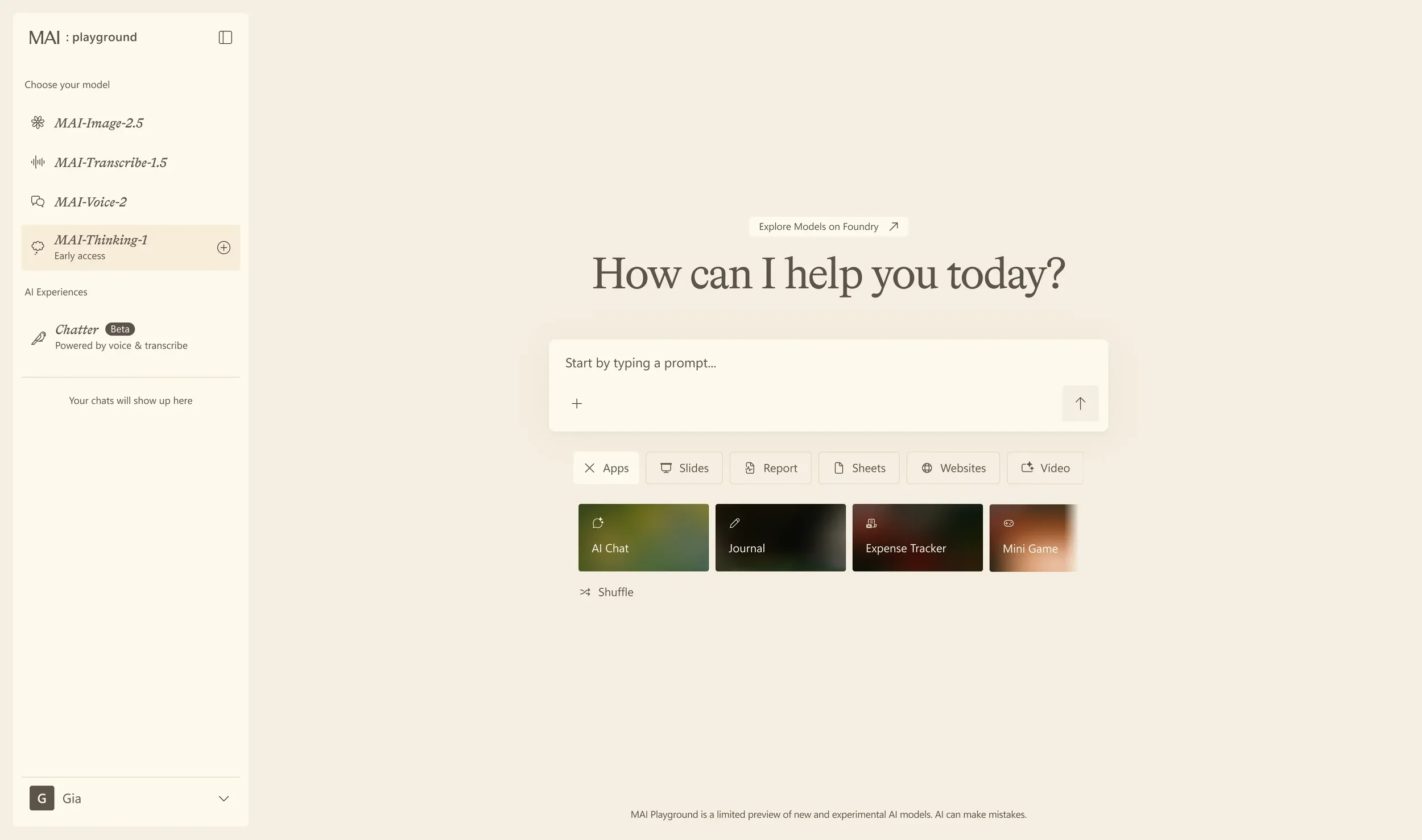
Designing a first-party front door to Microsoft AI's model lineup, from curiosity to deployment.
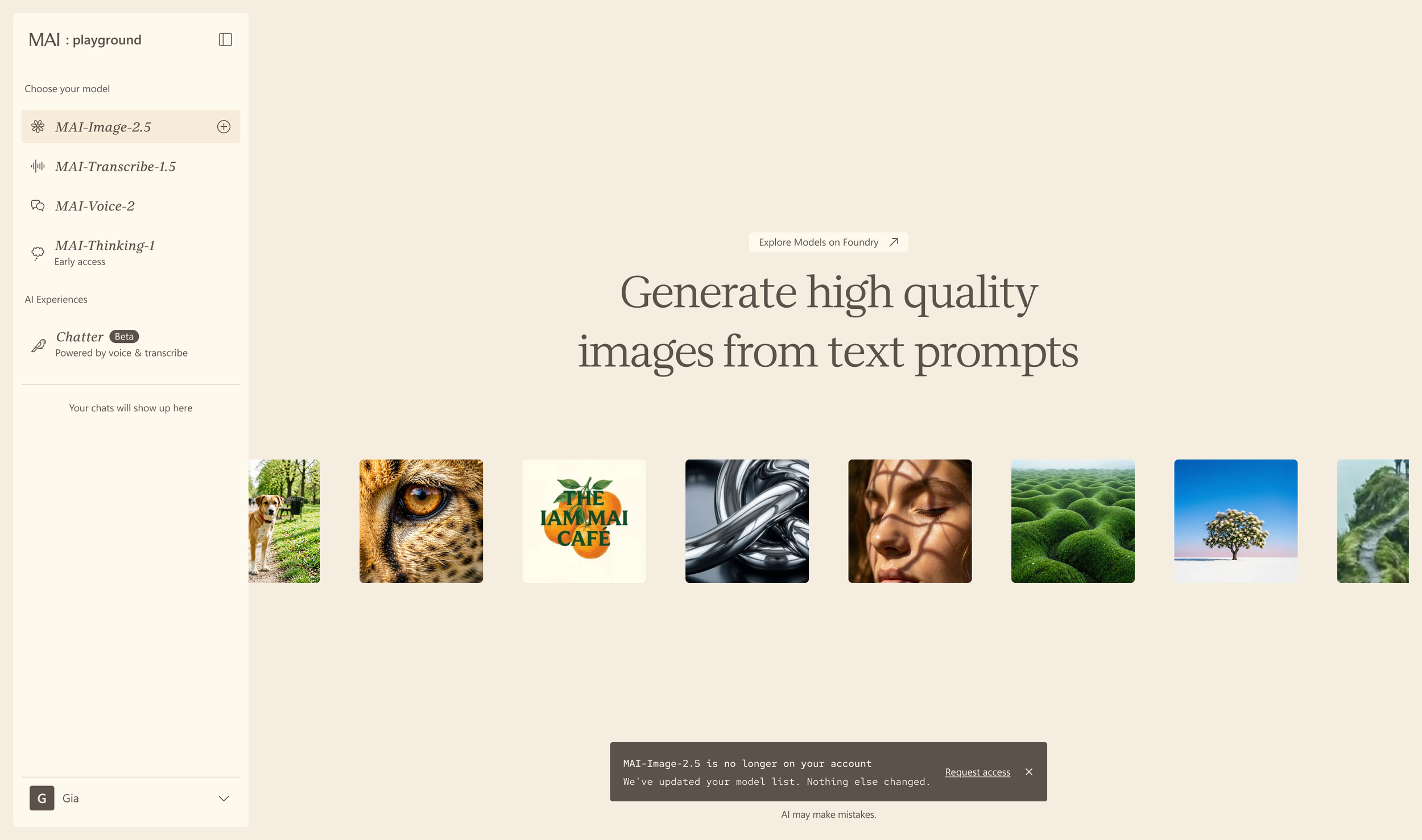
MAI PLAYGROUND
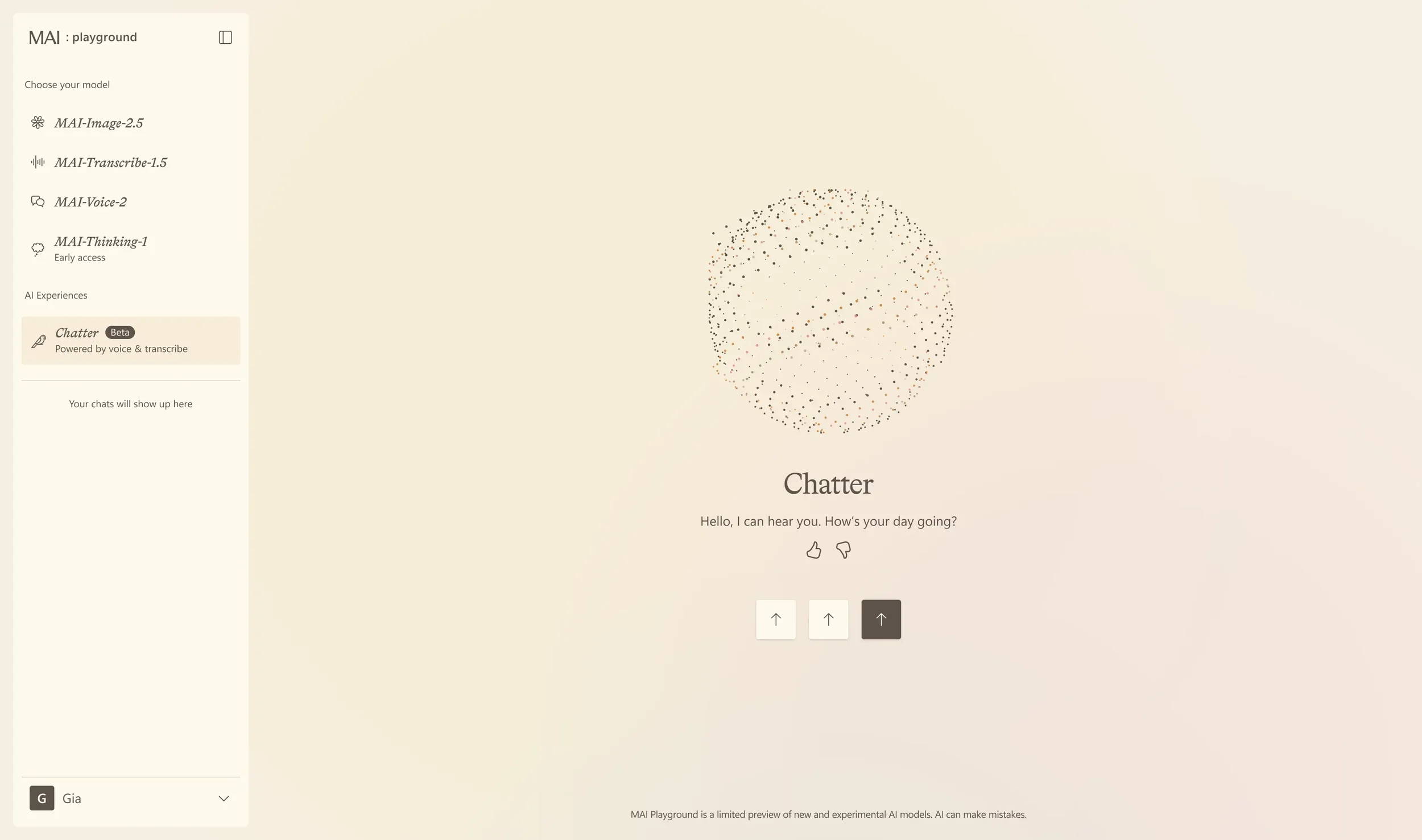
Playground bridges the gap between model curiosity and implementation, giving people a first-party place to explore MAI's latest models, test their capabilities, and see their value in action. From multimodal experimentation to a seamless path to Azure Foundry, Playground turns exploration into deployment.
I drafted the key screens that set Playground's visual direction, then fleshed out the full end-to-end UX, taking it from early concept through a shippable experience.
The real design problem wasn't any single interaction, it was breadth. Playground has to hold reasoning (MAI-Thinking-1), agentic coding (MAI-Code-1.1-Flash), image generation (MAI-Image-2.6), expressive voice (MAI-Voice-2), transcription (MAI-Transcribe-2), and cybersecurity workflows (MAI-Cyber-1-Flash) inside one coherent interface, without it feeling like a different product for every modality. I designed a system flexible enough to bend to what each model actually does, while staying recognizably one experience, so someone could go from typing a question to generating an image to testing a voice output without ever feeling like they'd left Playground.
The path from exploration to production mattered just as much as the exploration itself. Once someone found a model that fit what they needed, Playground had to hand them off to Azure Foundry cleanly, so trying an idea and actually building on it were two steps in the same flow, not two different products.
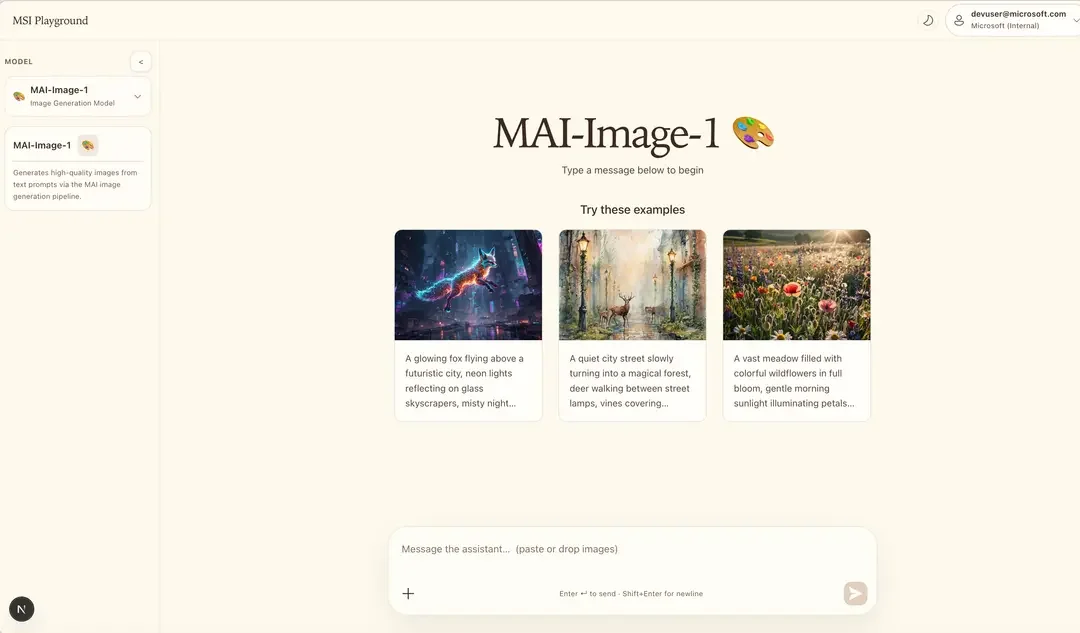
BEFORE
MY ROLE
As the Design Lead, I drafted the key screens that set Playground's visual direction, then owned the full end-to-end UX from early concept through a shippable experience, designing a single interface flexible enough to hold reasoning, code, image, voice, and transcription models without losing coherence.
AFTER